
TL;DR – Predictive maintenance in manufacturing uses AI and live sensor data to catch machine faults before they cause failure. It cuts unplanned downtime, lowers maintenance cost and lifts OEE, shifting plants from reactive repair to predictive, condition-based operations.
For decades, factories ran on one rule: fix it when it breaks, or service it on a fixed schedule. Both waste money. One invites surprise breakdowns. The other replaces healthy parts far too early.
Predictive maintenance in manufacturing changes the equation. By reading the signals machines already produce, AI predicts failures days or weeks ahead, so teams act with precision instead of guesswork.
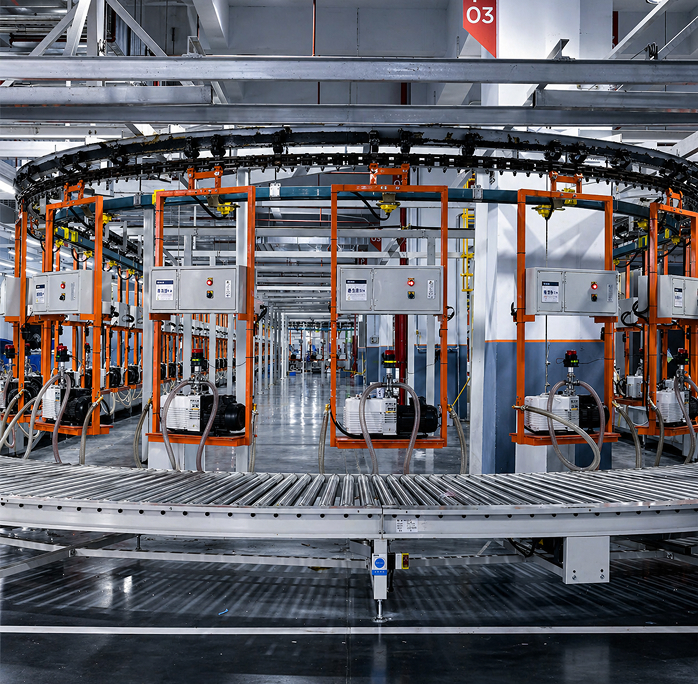
Every machine on your floor already generates a stream of data: vibration, temperature, pressure, current and cycle time. Most of it is logged, then quietly ignored, and never turned into a real decision.
Predictive maintenance software for manufacturing turns those raw signals into early warnings. It learns what healthy looks like for each asset, then flags the small deviations that grow into big failures.
The result is a plant that sees problems forming, ranks them by risk and fixes them on its own terms. That is the real shift, from reacting after the fact to predicting and preventing.
Predictive maintenance is not a single tool. It is a connected capability that spans how you watch machines, how you predict failures and how you plan the work. Together, these three stages make predictive maintenance in manufacturing actually work on the floor.
Condition monitoring continuously tracks the health of every critical asset using live sensor data. Vibration, temperature, current and acoustic signals stream in real time, and AI learns a healthy baseline for each machine so it can spot the smallest drift the very moment it begins.
Instead of a wall of raw numbers, operators see one clear health score for each asset. The system raises early, ranked alerts, so teams know exactly which machine needs attention first and why that matters right now.
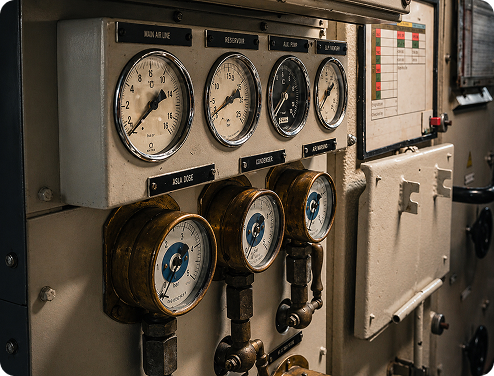
Failure prediction turns faint warning signs into a clear, time-based risk. The model compares live machine behavior against failure signatures learned from history, estimates remaining useful life and flags the assets most likely to fail next, often days or even weeks ahead of any visible symptom.
Every prediction is ranked by its impact on output and safety. Teams repair the highest-risk equipment first on planned stops, turning what used to be a costly surprise breakdown into a calm, scheduled and low-cost intervention.
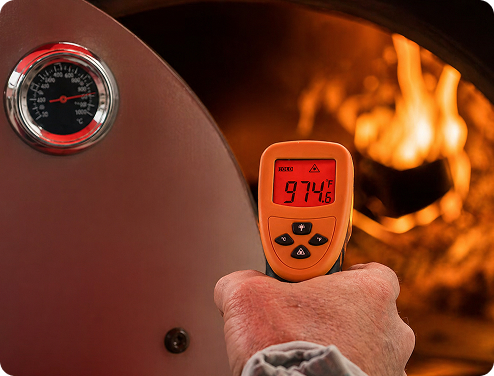
Maintenance planning converts AI predictions into a smart, condition-based schedule. Rather than following a fixed calendar, the plan is built from each asset’s real, measured risk, so healthy machines keep running while at-risk units are quietly booked into the next available planned maintenance stop.
Parts, labor and downtime windows are then arranged well in advance. The result is fewer emergency repairs, far less overtime and noticeably better use of every maintenance hour your team has available across a busy production week.
These are the questions engineers and buyers type into Google and AI assistants every day. Each answer below covers what it is, how it works and why it matters, with real predictive maintenance examples in manufacturing.
Predictive maintenance in manufacturing uses sensor data and AI to predict equipment failure before it happens, so repairs are scheduled just in time rather than too early or far too late.
Sensors continuously capture vibration, temperature, current and pressure from each machine, around the clock and on every shift. AI learns what normal looks like for that specific asset, then checks every live reading against that healthy baseline without pause.
When patterns drift toward known failure signatures, the system forecasts the likely fault, estimates how long the machine can safely keep running, and tells the team how urgent the risk really is.
Predictive maintenance in manufacturing avoids both surprise breakdowns and the waste of servicing healthy machines, protecting uptime, budgets and safety at the same time.
AI failure prediction is the engine inside modern predictive maintenance. It studies machine behavior and forecasts faults early, instead of waiting for an alarm long after damage has quietly started.
Models are trained on historical and live data drawn from your own equipment. They learn the subtle patterns that appear before each type of failure, from bearing wear to overheating, vibration and slow pressure loss.
When live behavior starts matching a known failure path, the system predicts the fault, estimates remaining useful life and ranks the risk by its real impact on production and safety, so nothing critical is ever missed.
Accurate prediction means teams fix the right machine at the right time, cutting downtime, cost and safety risk across the plant. These are the predictive maintenance benefits in manufacturing leaders value most.
Preventive maintenance follows a fixed calendar, while predictive maintenance acts on the real, measured condition of each machine. Both aim to avoid failure, but they reach that goal very differently.
Preventive maintenance services equipment on a set schedule, whether each machine needs it or not. It is simple to run, but it often replaces healthy parts too early and can still miss sudden, unexpected faults.
Predictive maintenance reads live condition data and acts only when the evidence truly calls for it. Work is driven by measured risk, not by the calendar, so effort always lands exactly where it is needed most.
For critical assets predictive usually wins, because it reduces downtime and waste at once while keeping people safer. Clear predictive maintenance examples in manufacturing make the right choice obvious.
Downtime savings measure how much unplanned stoppage prediction removes. The exact figure depends on your plant, your assets and how mature your data and maintenance processes already are.
By catching faults early, predictive maintenance converts unplanned breakdowns into planned, scheduled repairs. Lines stop on your own terms, during chosen low-impact windows, rather than in the middle of a critical production run you cannot easily recover from.
As the models keep learning your machines, forecasts grow sharper and fewer failures slip through. The predictive maintenance benefits in manufacturing then compound month after month, right across the whole operation, week after week.
Beyond the raw hours saved, the biggest gain is stability: fewer surprises, calmer shifts and far more predictable daily output.
When prediction replaces guesswork, the predictive maintenance benefits in manufacturing reach the whole operation, not only the maintenance team. Analysts now rank predictive maintenance among the highest-return uses of industrial AI on the modern factory floor. Done well, predictive maintenance in manufacturing pays for itself quickly.
Neuralixai AI for Manufacturing goes beyond dashboards. It models how machines, materials and conditions interact across the full production flow, then turns that insight into clear actions on the floor through Ekam AIaaS.
That system-level view is what makes predictive maintenance software for manufacturing truly deliver: real predictions, ranked by impact, in time to act. Want this on your line? Talk to our team.
The factories that win the next decade will not be the ones with the most machines. They will be the ones that hear what their machines are trying to say.
Neuralixai Team
No. Any plant with critical or costly equipment can benefit. Modern sensors and affordable cloud AI now make predictive maintenance practical for small and mid-sized manufacturers too, not only large enterprises with deep budgets and dedicated in-house reliability and maintenance teams.
Most plants already have enough to begin. Vibration, temperature, current, pressure and existing SCADA or historian records are common starting points. Neuralixai predictive maintenance software for manufacturing works with the signals you already collect and adds sensors only where needed.
Early anomaly detection can begin within a few weeks once your data is connected and cleaned. Forecast accuracy then improves as the models learn the rhythm of your machines. Many predictive maintenance examples in manufacturing show clear value building across the first months.
No, it makes them far more effective. Predictive maintenance shows your team exactly where to focus, so skilled people spend their hours fixing real, ranked risks instead of chasing false alarms or running unnecessary scheduled checks that add little value.
Yes, and legacy machines often benefit the most. Low-cost sensors and AI models can monitor older assets that were never designed for connectivity, extending their safe and productive life for years while you plan and budget for longer-term equipment upgrades.

Tell us about your plant and the assets that worry you most. Our team will show you how predictive maintenance in manufacturing can cut downtime and protect output, with no guesswork. The first conversation is free and practical.
Note: This article is intended to provide general information only. It does not account for the specific operations, equipment or objectives of any individual facility and must not be relied upon as engineering, safety or professional advice. While every effort has been made to ensure accuracy, technologies and best practices evolve over time. Readers should seek independent professional advice before making operational or investment decisions based on this information. Neuralixai accepts no liability for actions taken solely on the basis of this article.
579, 32nd D Cross, 10th Main,4th Block,
Jayanagar, Bengaluru, Karnataka 560011
148, Patparganj industrial Area, New Delhi 110092
4200 San Jacinto, Houston, Texas 77004, USA