
Predictive maintenance in oil and gas uses AI and sensor data to forecast equipment and pipeline failures before they happen. It converts costly, unplanned shutdowns into planned work, protecting uptime, safety and production across upstream, midstream and downstream assets.
Oil and gas runs on rotating and static equipment that fails in expensive, sometimes dangerous ways. Pumps, compressors, valves and pipelines all give off early warning signs long before they break.
The challenge is hearing those signals in time. Predictive maintenance in oil and gas does exactly that, reading live data continuously so teams act days or weeks ahead of failure.
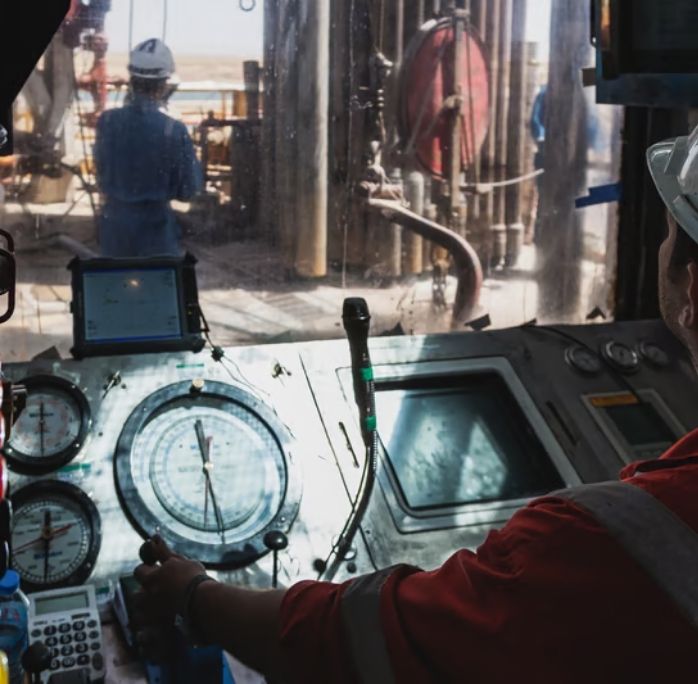
Traditional maintenance in the sector swings between two costly extremes: fix it after it breaks, or service it on a rigid calendar. One invites disaster, the other wastes money and downtime.
Equipment failure prediction in oil and gas replaces both with evidence. AI learns the healthy signature of each asset, then flags the small deviations that lead to leaks, trips and unplanned shutdowns.
The payoff is control. Failures become scheduled, low-cost interventions, crews work with parts ready, and the most hazardous emergency repairs are avoided before they ever begin.
Predictive maintenance in oil and gas works as a loop: monitor assets, predict failures and plan the work. Here is how each stage turns raw field data into safer, steadier operations.
Monitoring connects pumps, compressors, valves, pipelines and rotating equipment through SCADA, DCS, historians and sensors. AI learns a healthy baseline for each asset, then watches vibration, pressure, temperature and flow in real time without pause.
Instead of a flood of raw tags, engineers see a clear health score for every critical asset. The system raises early, ranked alerts, so crews always know which equipment needs attention first and exactly why it matters. In the field, that means fewer emergencies and safer, calmer work for every crew.
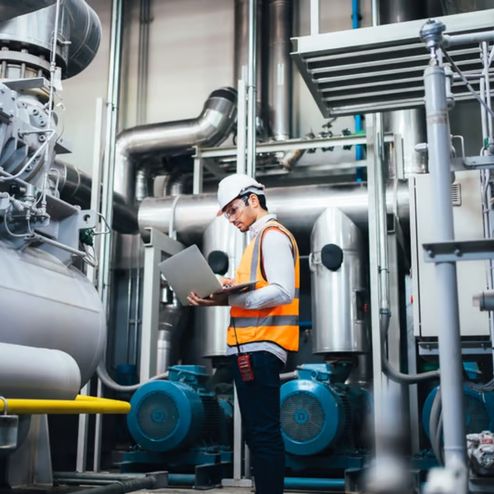
Prediction turns those signals into a clear, time-based risk. Equipment failure prediction in oil and gas compares live behavior against known failure paths, estimates remaining useful life and forecasts which assets are most likely to fail next.
Each forecast is ranked by impact on production and safety, so the riskiest equipment is addressed first. Days or weeks of warning give teams time to plan calmly instead of scrambling after a sudden trip. In the field, that means fewer emergencies and safer, calmer work for every crew.
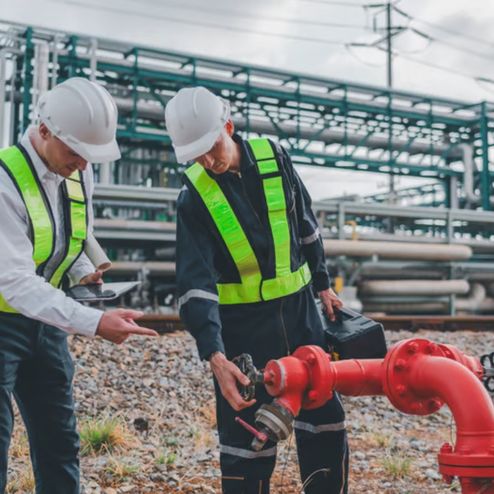
Planning converts predictions into a smart, risk-based schedule. Healthy assets keep running, while at-risk equipment is booked into planned shutdowns with parts, permits and crews arranged well in advance for a safe job.
Predictive maintenance for pipelines fits the same loop, scheduling inspection and repair where corrosion or leak risk is highest. The result is fewer emergencies, safer work and far better use of every maintenance window. In the field, that means fewer emergencies and safer, calmer work for every crew.
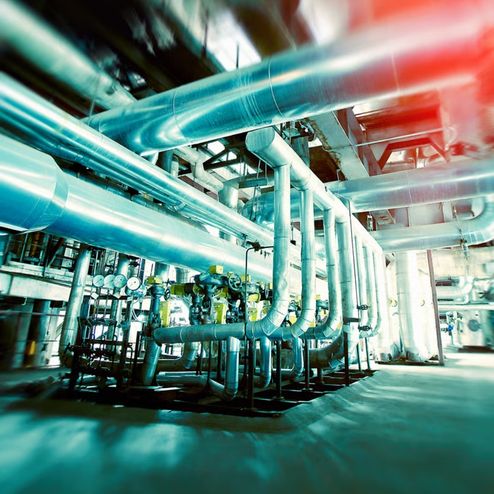
These are the questions operators and reliability engineers ask Google and AI assistants every day. Each answer covers what it is, how it works and why it matters, grounded in the real predictive maintenance gains in oil and gas.
Predictive maintenance in oil and gas is the use of AI and sensor data to forecast equipment and pipeline failures before they occur. Repairs are scheduled just in time, avoiding both surprise shutdowns and wasteful calendar-based servicing.
Sensors stream vibration, pressure, temperature and flow from critical assets. AI learns the normal signature of each one, then checks live readings against that baseline continuously across upstream, midstream and downstream sites.
When behavior drifts toward a known failure path, the system forecasts the fault and estimates safe remaining run time. Crews then plan the repair instead of reacting to an emergency trip. Engineers stay firmly in control, with the system advising rather than deciding.
In high-hazard operations, foresight prevents the shutdowns and incidents that cost the most in money, downtime and human safety.
AI predicts failures by learning the early warning patterns of each asset from historical and live data. It then watches for those signatures in real time and forecasts faults, from rotating-equipment wear to pipeline corrosion and leaks.
Models are trained on past failures and healthy operation, so they recognize the subtle drift that precedes trouble. They track vibration, pressure and flow, catching changes far too small for routine inspection to notice.
For pipelines, the same approach watches for pressure anomalies and corrosion signatures along the network. Equipment failure prediction in oil and gas then ranks each risk by its impact on safety and supply. The gain is real and measurable.
Accurate prediction means the right asset is fixed at the right time, cutting downtime, cost and the chance of a dangerous failure.
It reduces downtime by converting unplanned, emergency shutdowns into planned, scheduled work. Catching faults early keeps wells, compressors and pipelines producing on the operator’s terms rather than failing mid-run.
When a fault is forecast in advance, repairs are scheduled into low-impact windows with parts and crews ready. The line or asset stops briefly, by choice, instead of tripping suddenly during critical production.
Over time, fewer failures slip through as models learn each asset. The predictive maintenance benefits in oil and gas then compound, with steadier output and fewer costly emergency interventions. Insights are ranked by impact, so the highest-risk asset is always addressed first.
Every avoided emergency shutdown protects both production revenue and the workers who would otherwise face a high-risk repair.
Preventive maintenance services assets on a fixed calendar, whether they need it or not. Predictive maintenance acts on real, measured condition. In high-stakes oil and gas operations, predictive usually delivers far more value.
Calendar-based servicing is simple, but it over-maintains healthy equipment and can still miss sudden faults between intervals. In remote, hazardous settings, both the waste and the missed risk are especially costly.
Predictive maintenance acts only when evidence calls for it, focusing effort where risk is real. Many operators blend the two, using prediction for critical, high-value assets and calendars for simple, low-risk parts. Engineers stay firmly in control, with the system advising rather than deciding.
For critical, high-hazard equipment, predicting failure protects safety and margin far better than a fixed calendar ever can.
The real benefits of predictive maintenance in oil and gas reach across uptime, safety and cost. The predictive maintenance benefits in oil and gas below are the ones operators feel first, often within the first program. The same logic powers predictive maintenance for pipelines across the network.
Neuralixai AI for Oil and Gas turns data from wells, pipelines, SCADA, DCS and historians into early failure warnings, ranked by impact and ready to act on, delivered through Ekam AIaaS.
Reliable failure prediction across oil and gas assets is what keeps production steady and crews safe. Want it on your assets? Talk to our team.
In oil and gas, the most expensive failure is always the one you did not see coming. Prediction is how you stop paying for surprises.
Neuralixai Team
Rotating equipment like pumps, compressors and turbines benefit most, along with pipelines and critical valves. Any asset whose failure causes costly downtime or safety risk is a strong candidate for prediction over calendar-based servicing alone. It protects both margin and the workforce.
Yes. Predictive maintenance for pipelines watches pressure, flow and corrosion signatures across the network to flag leaks and weak points early. Crews then inspect and repair where risk is highest, before a small problem becomes a major incident. That foresight prevents costly surprises.
Most operators already have enough. SCADA, DCS, historian records and existing vibration or pressure sensors are common starting points. Neuralixai uses the data you already collect and adds instrumentation only where it clearly sharpens predictions. It protects both margin and the workforce.
Yes. Edge models run locally on rigs and remote pipelines even with weak connectivity, then sync insights to the cloud when a link is available. Isolated, high-value assets still get continuous, reliable failure prediction and monitoring. The result is steadier, safer operations.
Early anomaly detection can begin within weeks of connecting data. Forecast accuracy then improves as models learn each asset, so the predictive maintenance benefits in oil and gas build steadily over the first several months. It protects both margin and the workforce.

Tell us about the assets that worry you most, from rotating equipment to pipelines. Our team will show you how predictive maintenance in oil and gas can protect uptime and safety, with no guesswork. The first conversation is free.
Note: This article is intended to provide general information only. It does not account for the specific operations, equipment or objectives of any individual facility and must not be relied upon as engineering, safety or professional advice. While every effort has been made to ensure accuracy, technologies and best practices evolve over time. Readers should seek independent professional advice before making operational or investment decisions based on this information. Neuralixai accepts no liability for actions taken solely on the basis of this article.
579, 32nd D Cross, 10th Main,4th Block,
Jayanagar, Bengaluru, Karnataka 560011
148, Patparganj industrial Area, New Delhi 110092
4200 San Jacinto, Houston, Texas 77004, USA